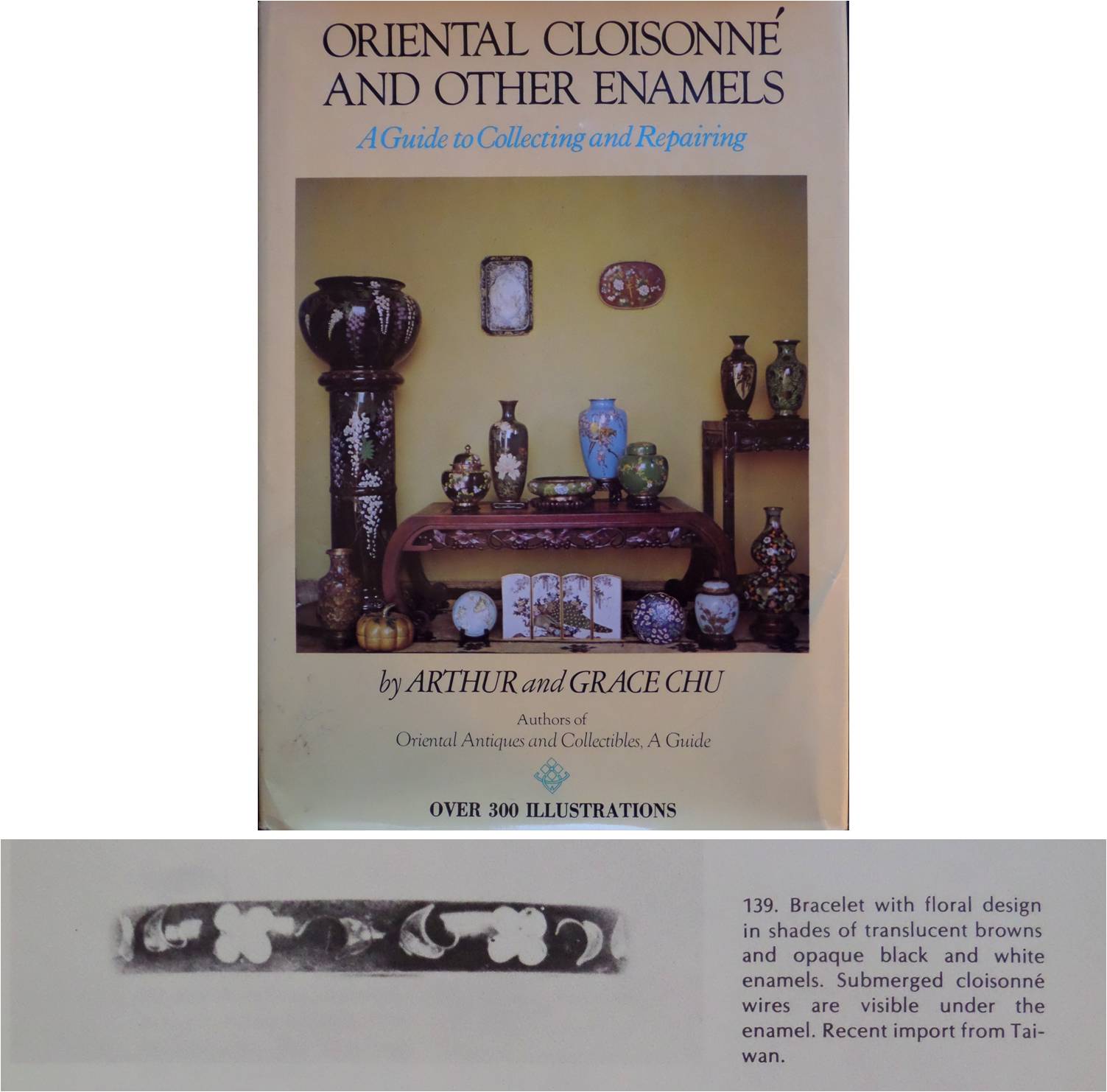
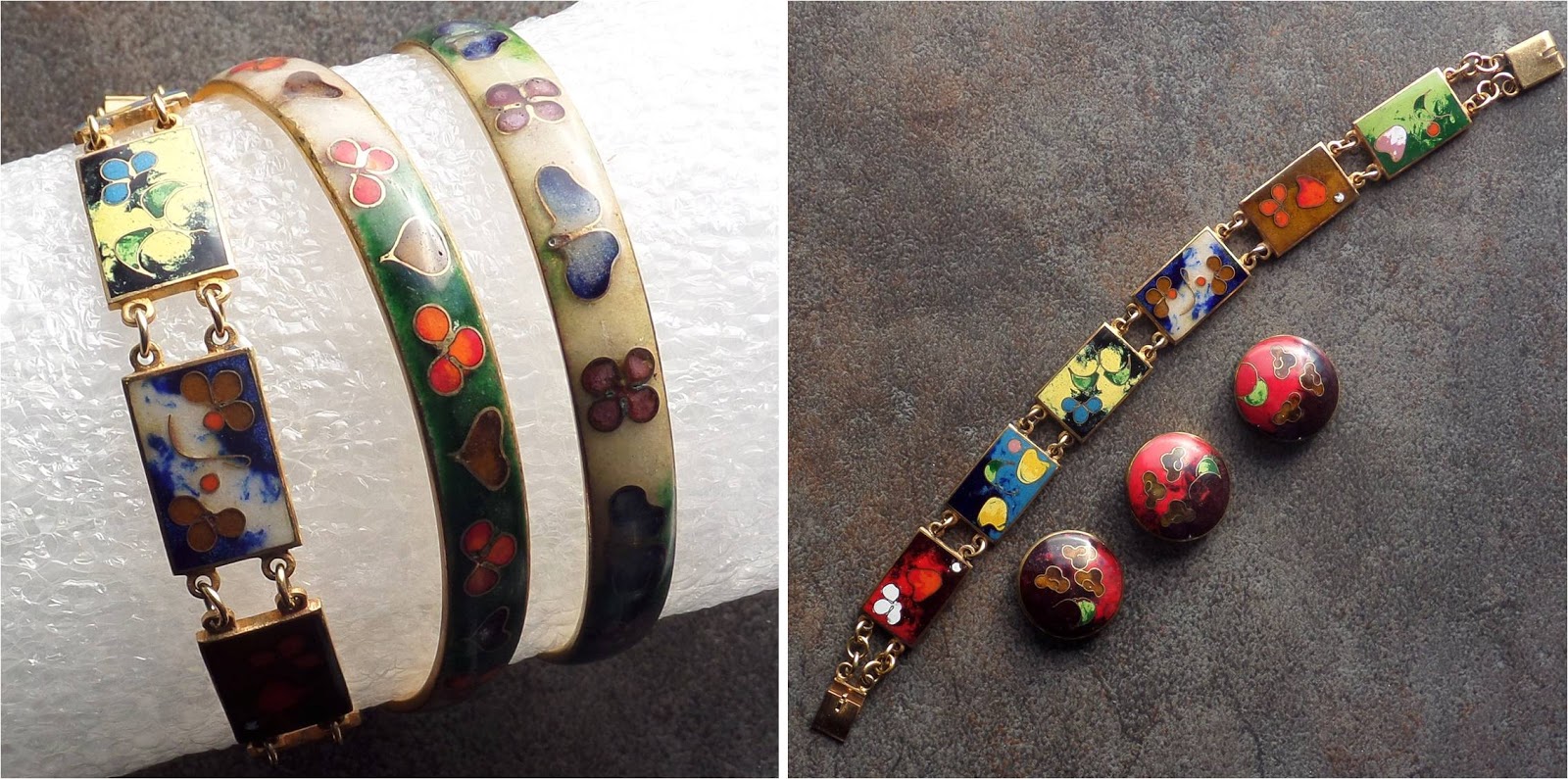
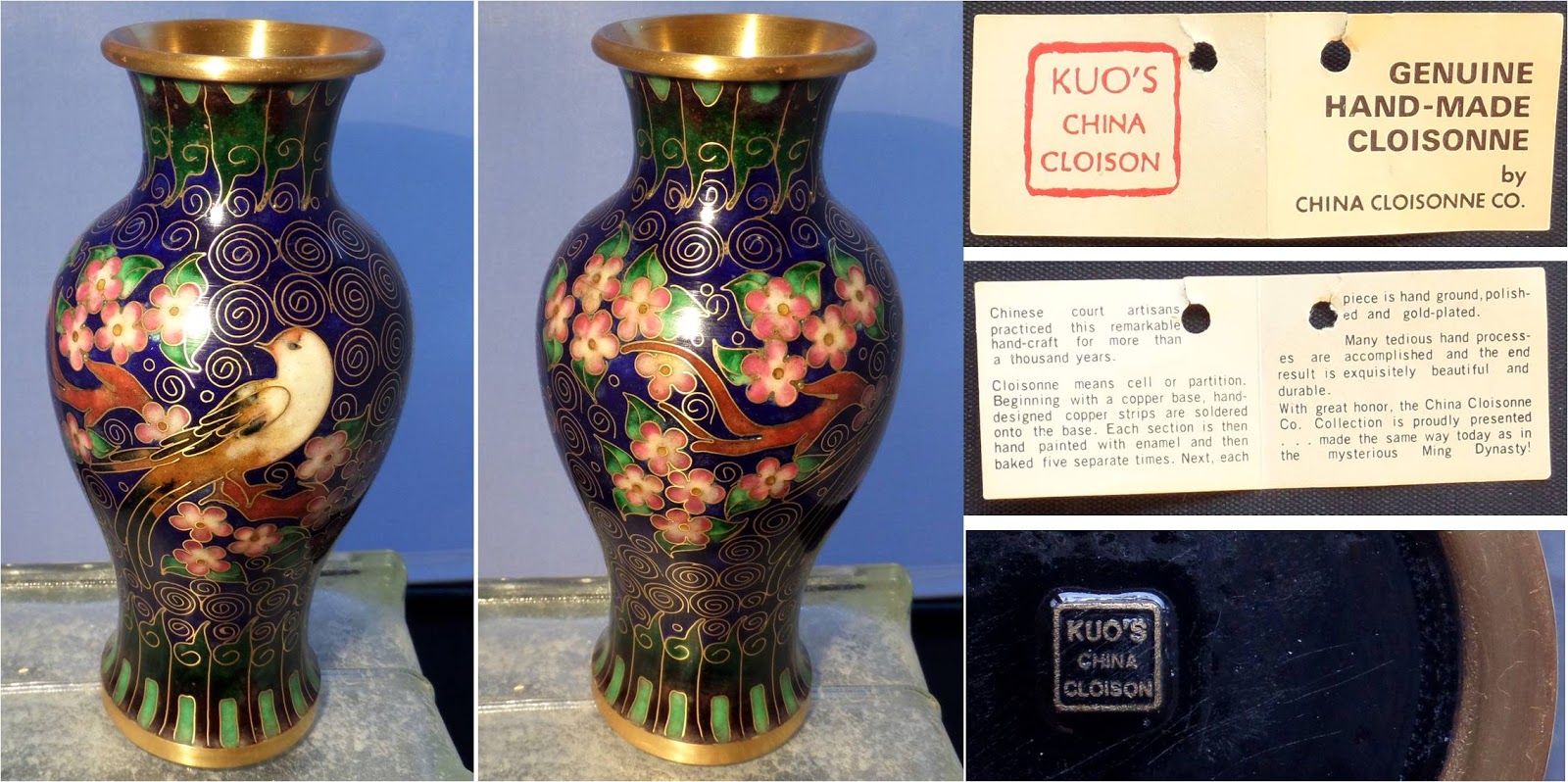
Two renowned cloisonné artists from Taiwan are Kuo Ming-chiao (1917-2014) and his son, Robert Kuo.
Kuo Ming-chiao has dedicated
himself to the creation of cloisonne art for 30 years. He began his artistic
career, however, as a painter, and his works were internationally exhibited and
acclaimed as masterpieces of Chinese painting. He received many awards, including
those presented in Vietnam, Australia and the United States.
His painting career came to an abrupt and
unexpected halt in a moment's inspiration which changed his artistic path.
While travelling in Europe to attend an exhibition of his paintings in
1960, he had what he described as an "electrifying experience." In a marketplace
near Cologne, West Germany, he was overwhelmed by the splendor of the cloisonne
art on display. He abandoned his plans to continue his continental tour,
choosing instead to remain in the small German town to learn the art of cloisonne.
Robert Kuo’s online biography tells how he spent over a
decade, from his teenage years to his late 20s, working in his father’s atelier
to learn the process of cloisonné manufacture.
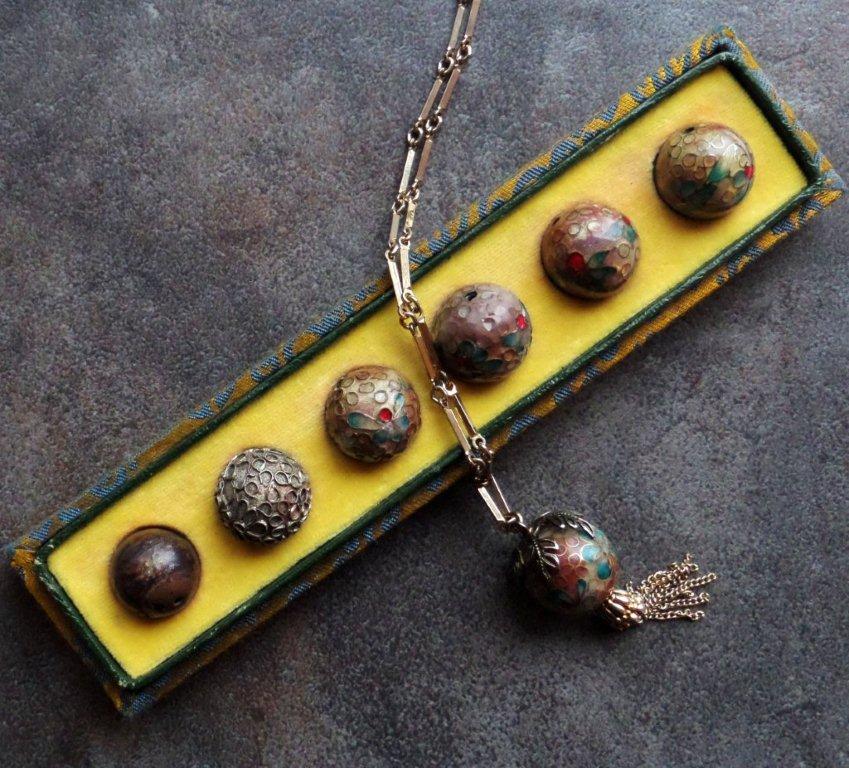
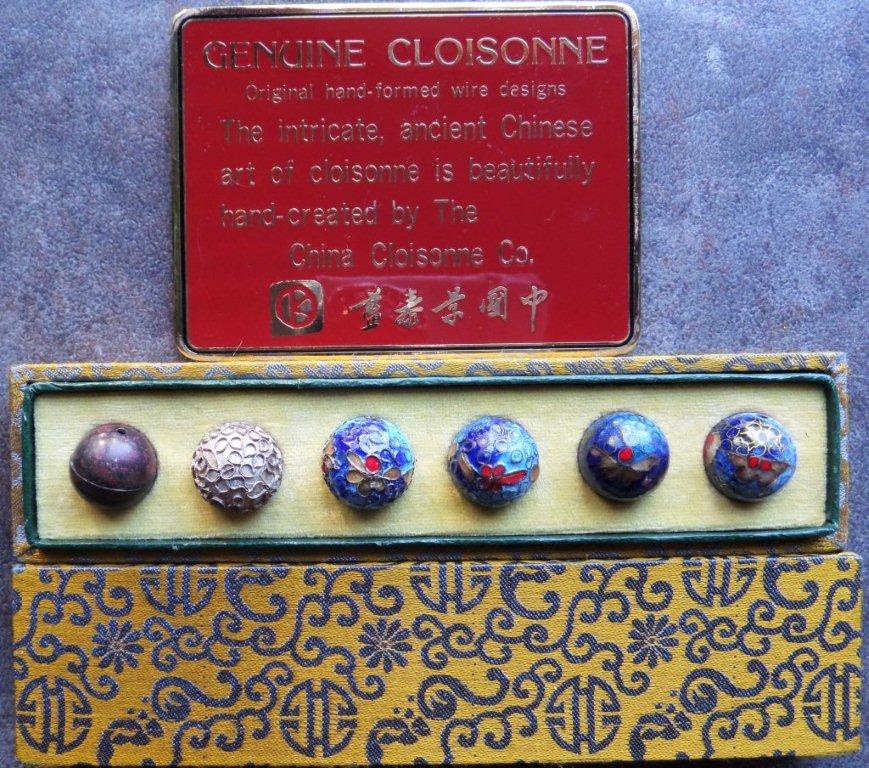
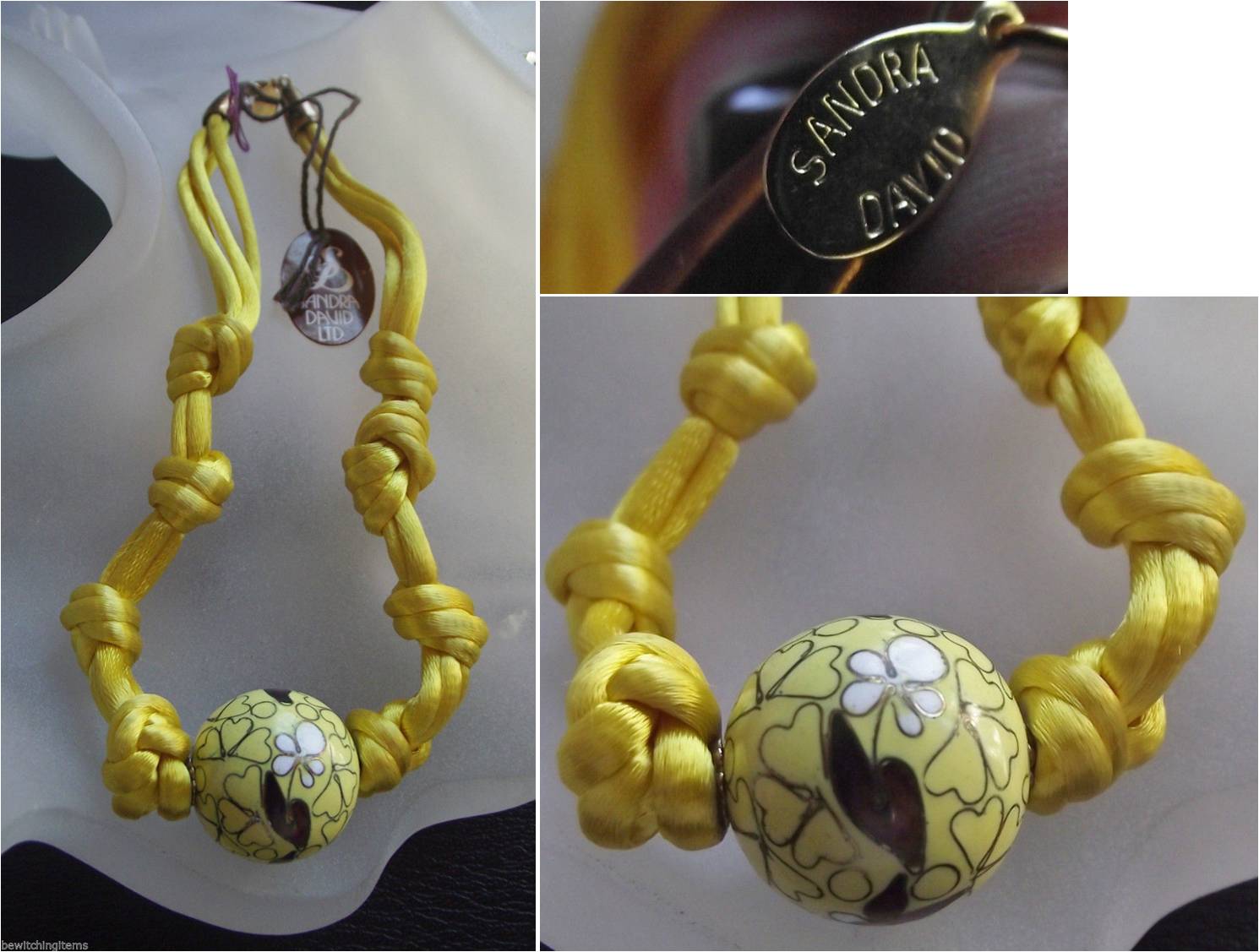
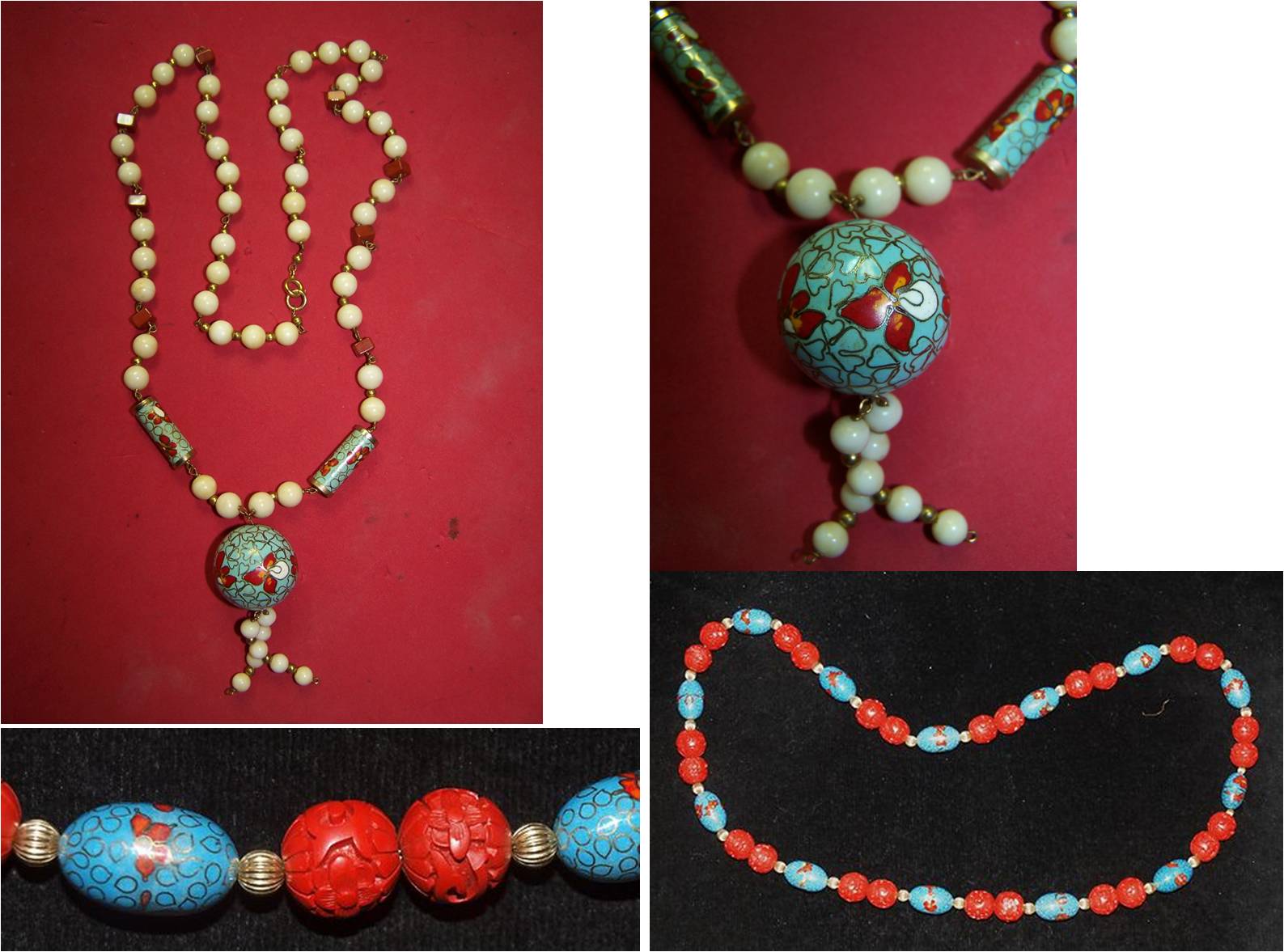
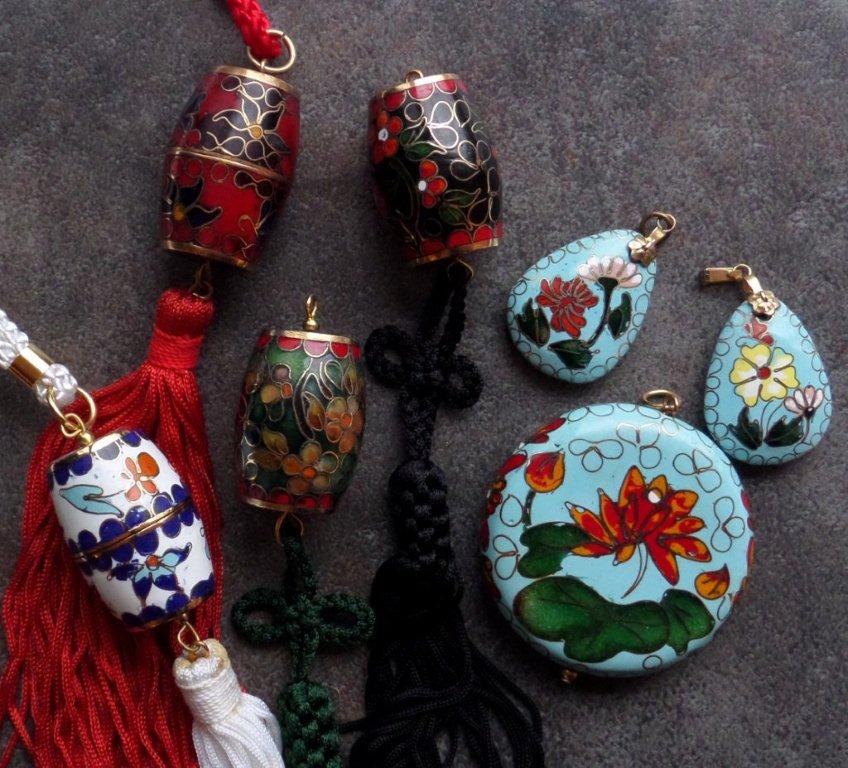
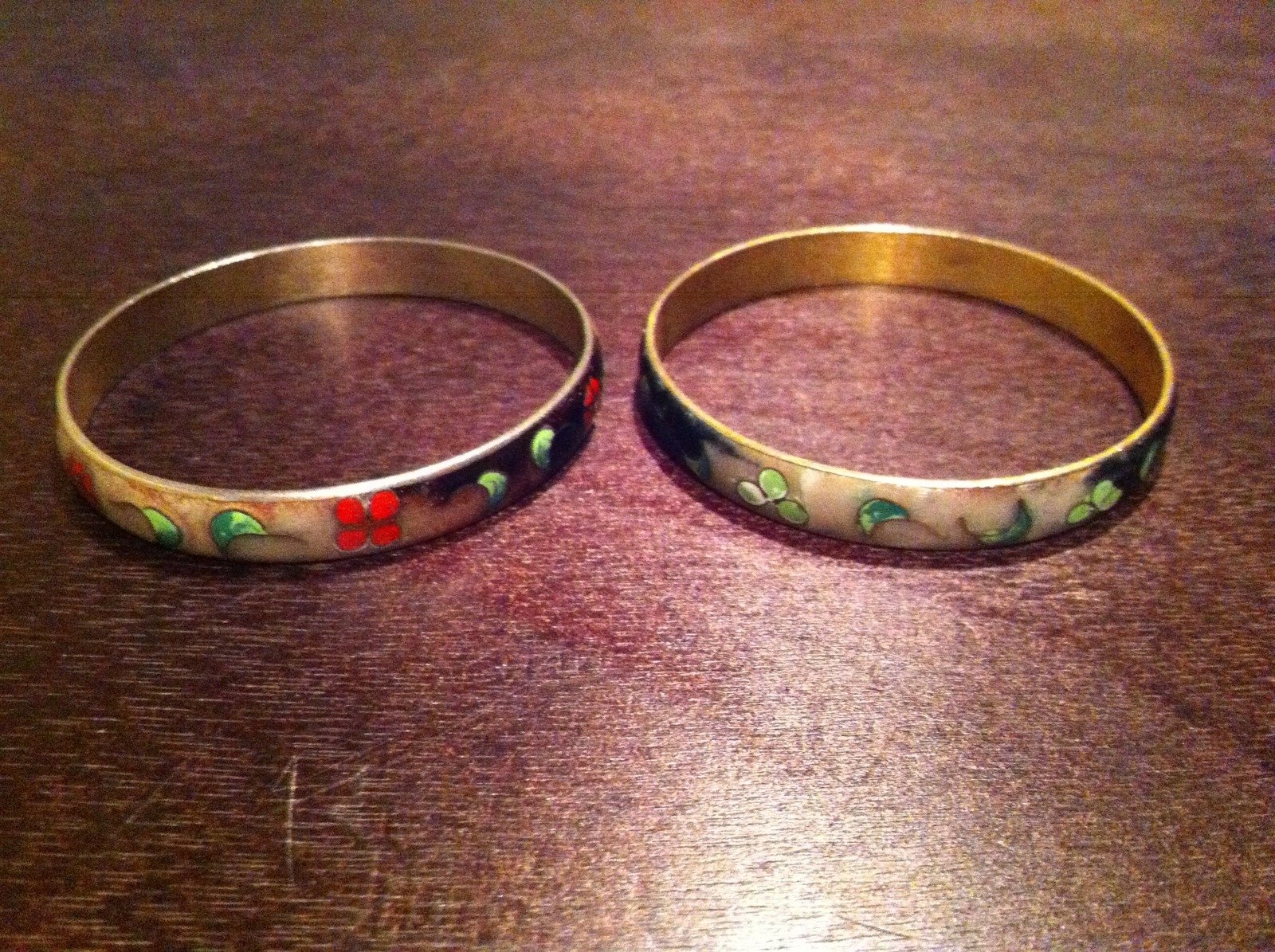
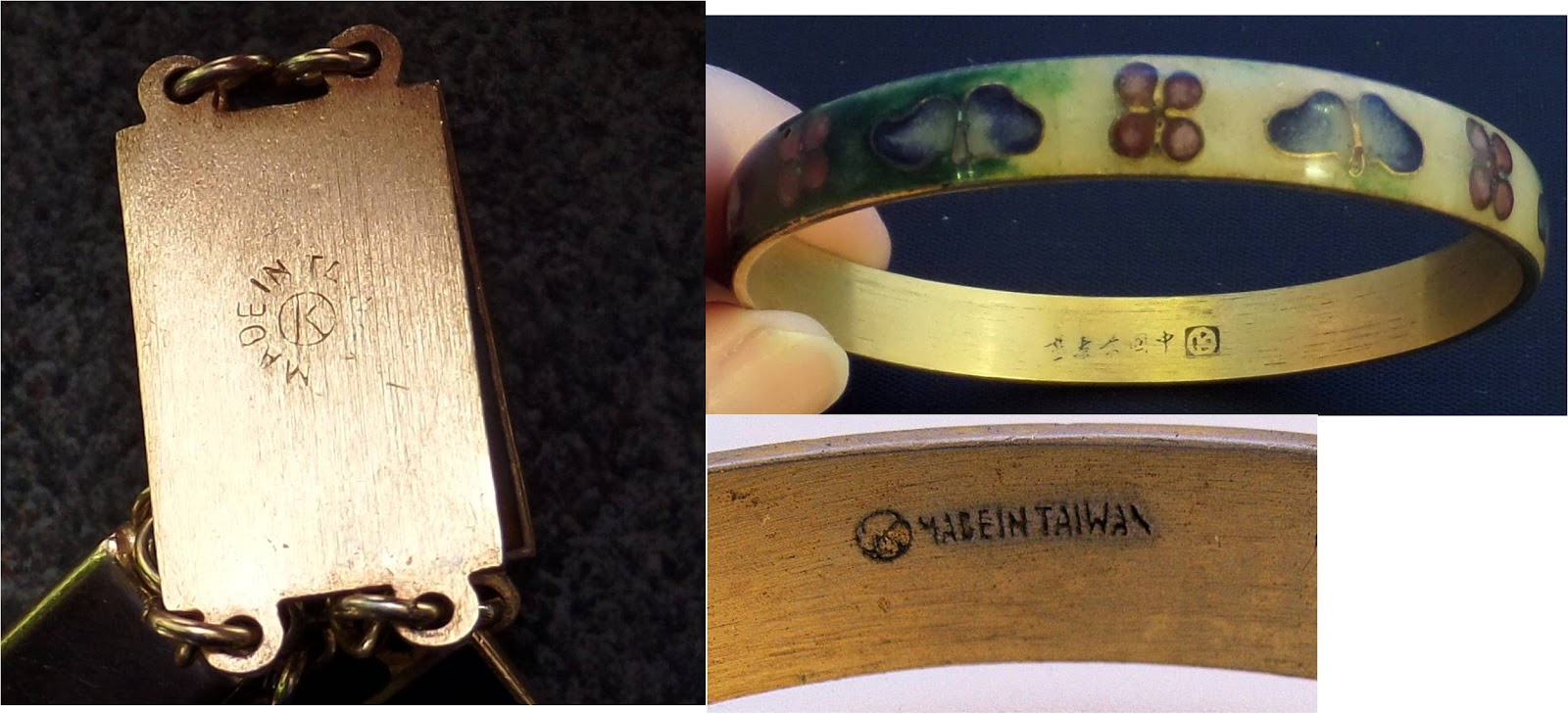
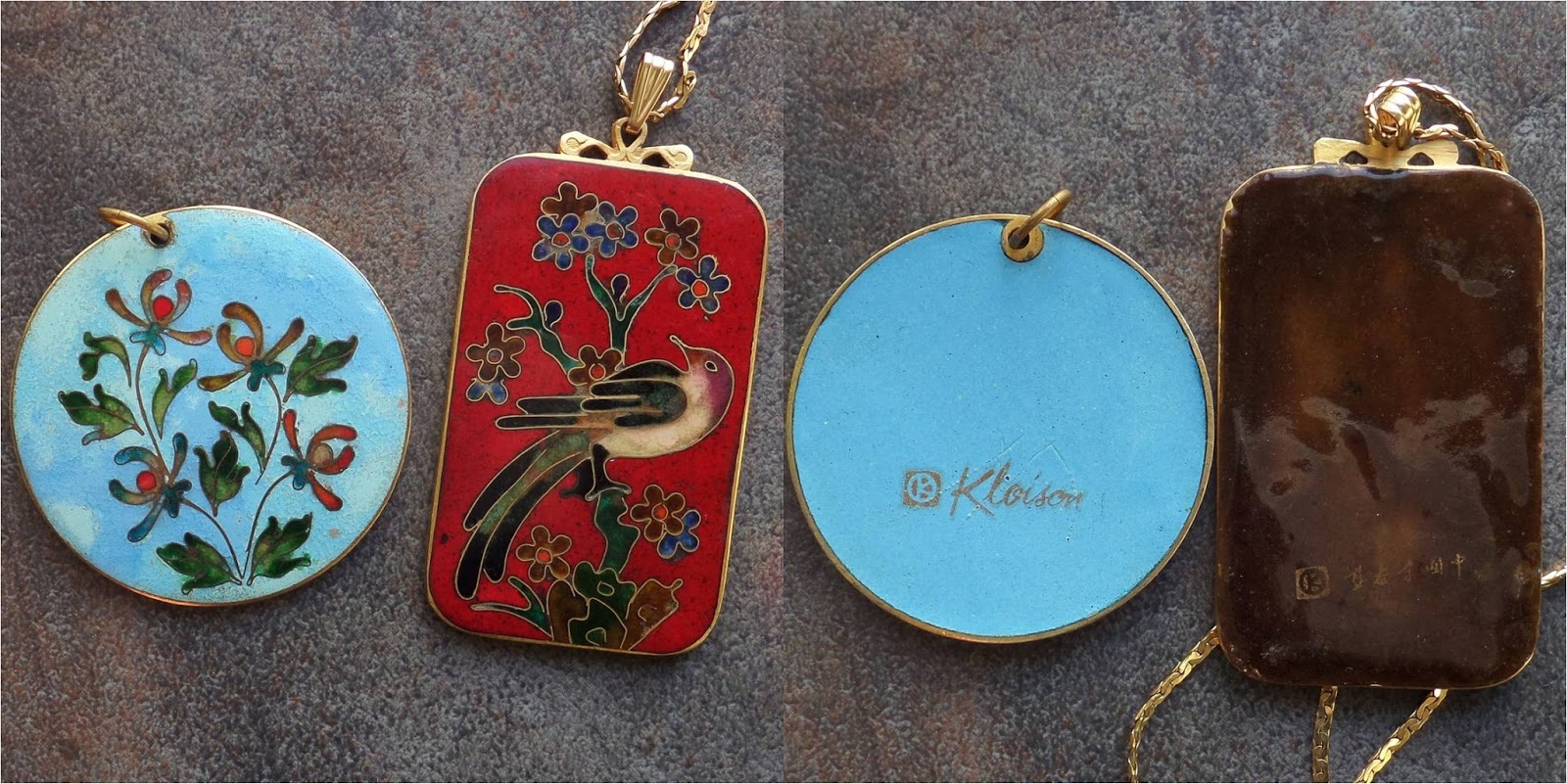
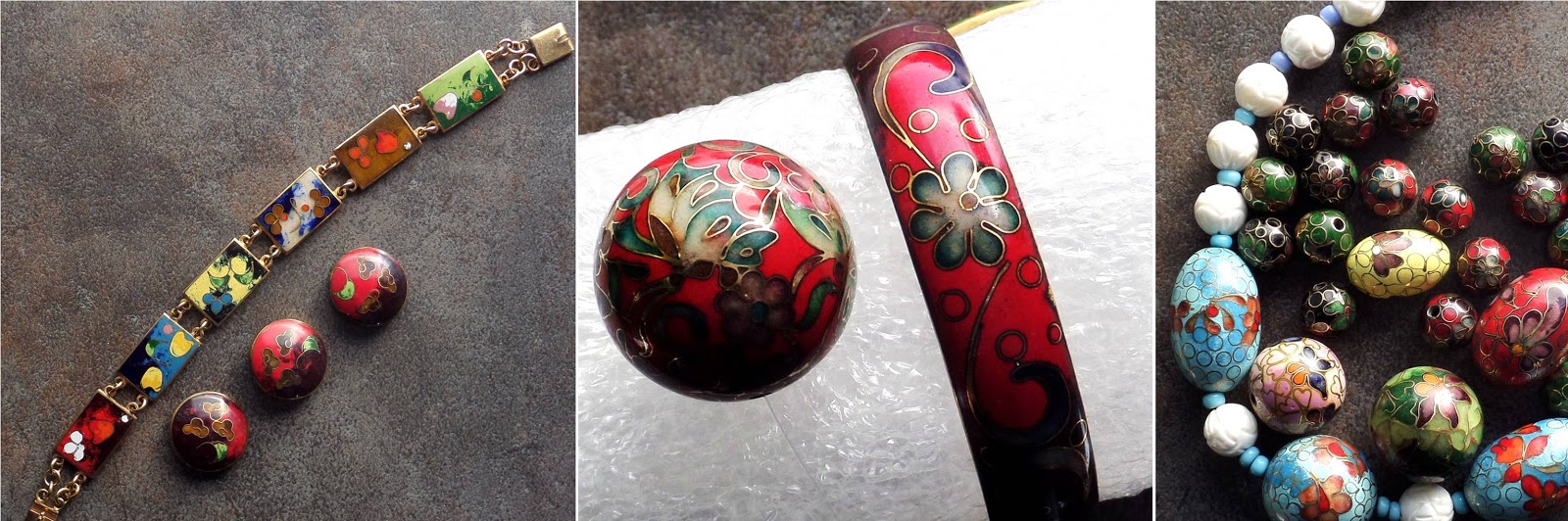
Cloisonne with the distinctive Kuo look shows up in many
objects – vases, bowls, plates, coasters, napkin rings, salt and pepper sets,
desk sets, buttons, bangles, bracelets, beads, paperweights, snuff bottles…
What puzzles me is how this was all accomplished. Certainly there had to be other artisans in
the factory besides Kuo senior and son – people to manufacture the brass
shapes, produce the cloison wire, apply the designs, manage the sourcing and
stocking of the enamels and polishing grits, supervise the kiln, manage work
flow and ensure proper work station furnishing, machines, and tools, etc. etc. Cloisonne is a very labor-intensive process
requiring practice and skill.
If one developed a sudden interest in cloisonné manufacture,
surely the most effective way to start production would be to either take over
the management of an existing atelier, or at least commission special work by
them? Why reinvent the wheel? Were the resulting designs a coordinated
effort between traditional artisans and Kuo artistic innovation?
As is well known, Taiwan became the country of refuge for
mainland Chinese who fled the Communist party victorious in the civil war. Wikipedia relates:
On
October 1, 1949, Mao Zedong proclaimed the People's Republic of China with
its capital at Beiping, which was renamed Beijing. Chiang Kai-shek and
approximately 2 million Nationalist Chinese retreated from mainland China to
the island of Taiwan in December…
Note the date Oct 1, 1949.
On eBay I found this little cloisonné egg box, with its original label
intact.
Unfortunately I am illiterate in
Chinese, but the numbers “49 11 1” made me wonder if they represent the date of
November 1, 1949, and if there was any connection between the migration of
Nationalists to Taiwan and the founding of the cloisonné factory that produced
this egg (instead of, say, commemorative of a birthday or holiday or something). The style of cloisonné – transparent cobalt
enamel, mixed rose and transparent enamels in the flowers and butterflies, small
circles as background fill – is not at all like mainland work. Is this an actual Kuo design, a Kuo-style
copy, or an example of a general Taiwanese cloisonné style that developed after
1949 by artisans fleeing the mainland?
At least one cloisonné artisan liked to use a semicircle of
wire loops to represent vegetation or foliage – you can trace this motif from
the small bottle pendant through this Kuo cloisonné egg.
Overall, these designs depart from decades-long stereotypes
produced by other Chinese workshops, as if the artist were following his/her
own vision to represent traditional Chinese themes.
 |
| Ruyi motif on pre-WWII vase, on JingFa vase post-1956, and Yun Kang vase from Taiwan. Note the completely different neck and collar wire motifs in the Taiwan vase. |
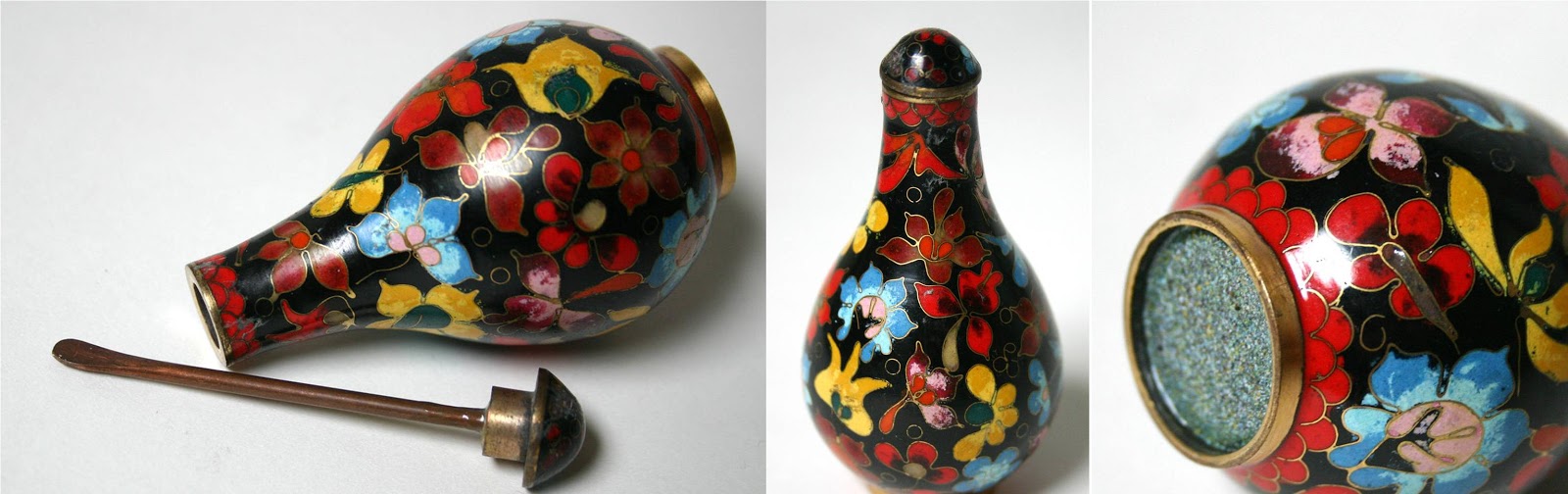 |
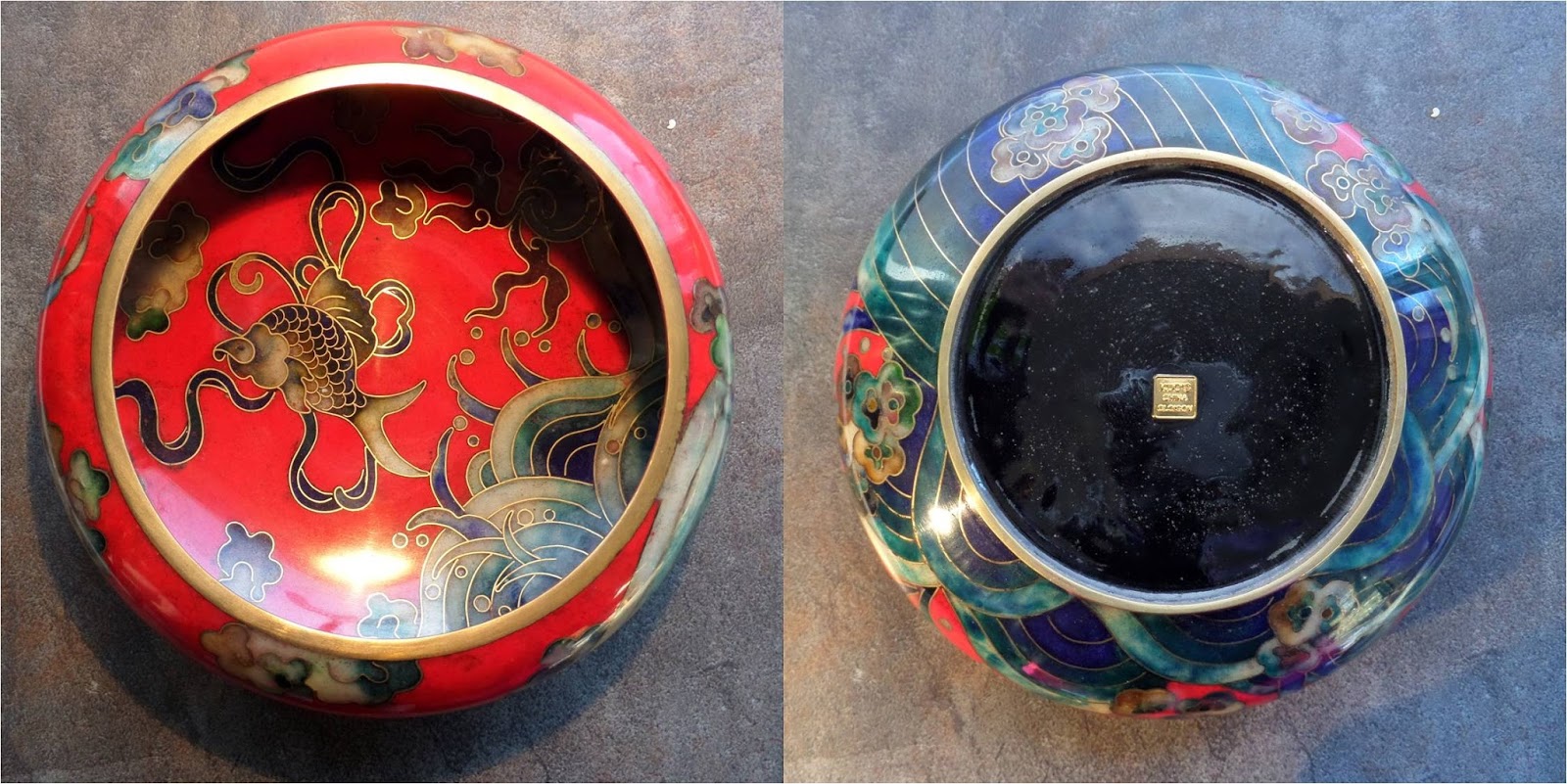
| Note the granite-like counter enamel on the base, and the splashy enamel application that is also seen in Taiwan cloisonne link bracelets. |
Then there is the mysterious Yun Kang factory.
Pieces display all the characteristics of
Kuo cloisonné, with a distinctive granite-like counter enamel (counter enamel
is applied to the reverse sides of the metal form to provide equal tension
against the decorative surface enamels, so that the metal is not warped as the
glassy enamel contracts during melting and cooling). Is this a predecessor to the Kuo label?
Evidence such as this Mementos and Artifacts blog account dates the small Kuo-style vases and condiment sets
to the late 1970s.
 |
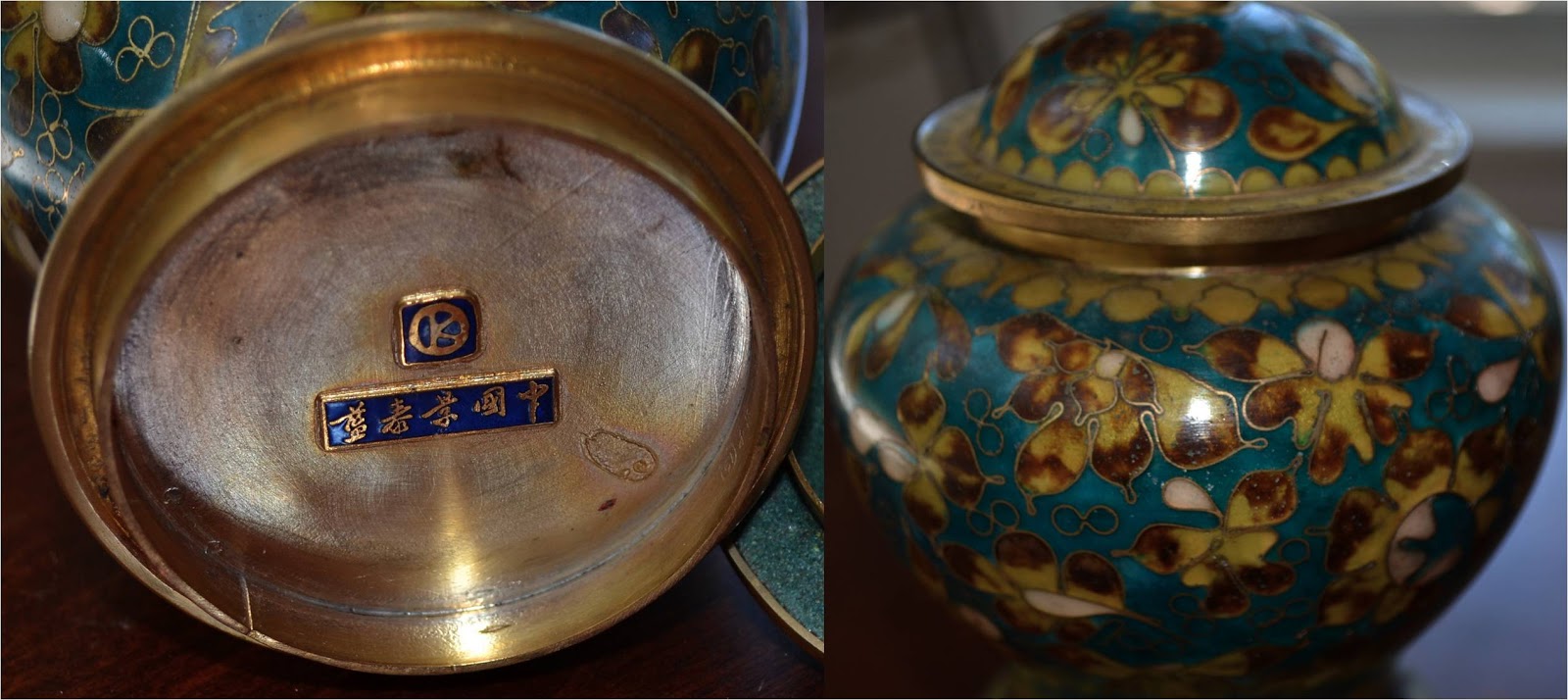
| Jar inscription on base reads "Taipei Taiwan 1975." Note similarity of Ruyi-style collar motifs in Jar and vase. |
 |
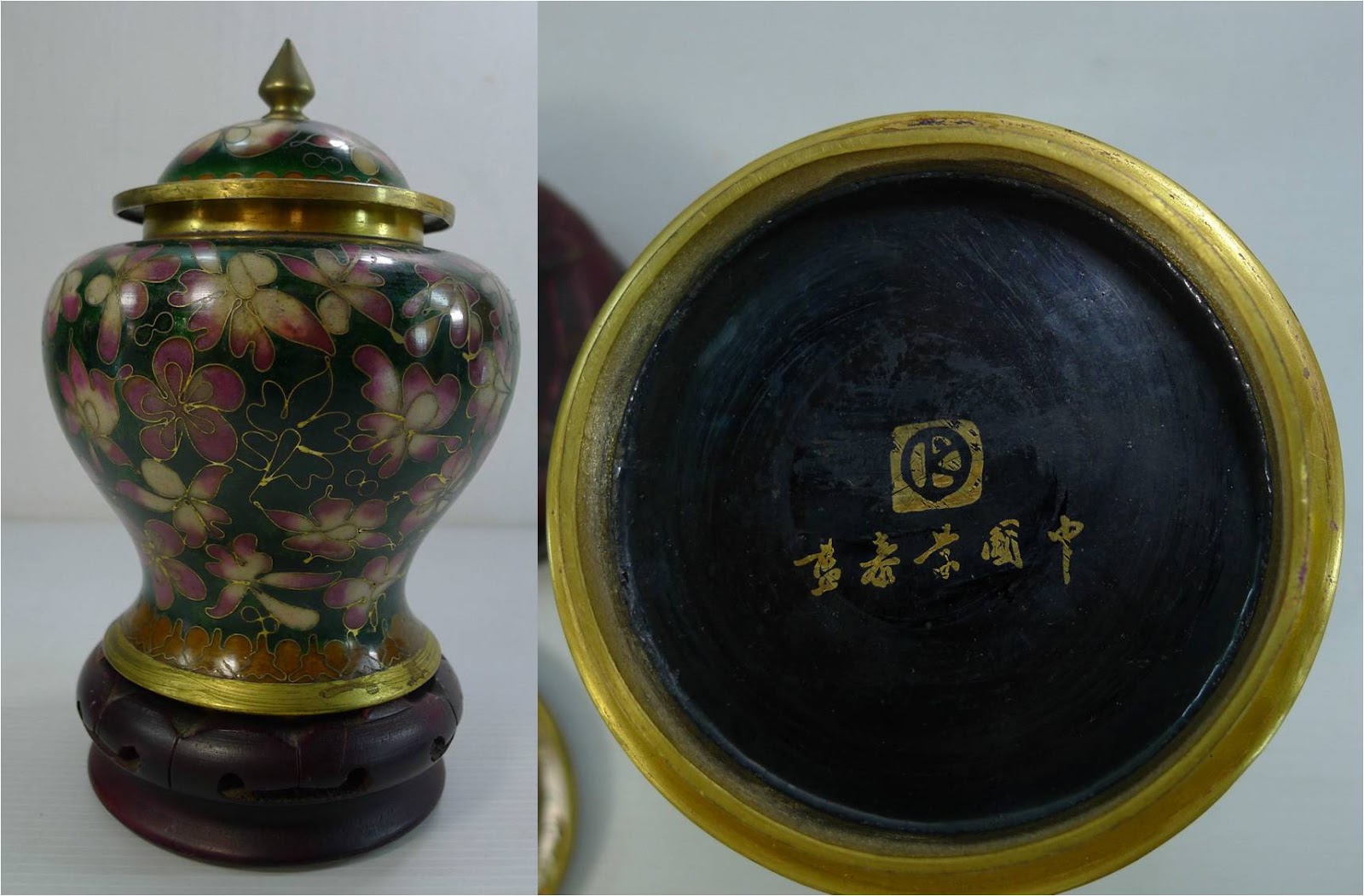
| Vase on left courtesy of eBay vendor gottoget123. These vases all have a Kuo logo on the base. The viewer will no doubt have already noticed their similarity to the Yun Kang vase pictured above. |
Later cloisonné pieces by Robert Kuo became more
abstract, larger, and architecturally imposing - pieces of sculpture rather than decorative bric-a-brac.
During the 1990s, as mainland China’s economy became more
export-oriented and rural populations flocked to urban factory jobs, a large
proportion of Taiwan factories of all varieties moved their production
facilities to the mainland. It is hard not to draw a parallel between
this account from Taiwan Review of a glass factory and the trajectory of the Kuo cloisonné atelier:
Since
starting work in his teens at this factory, which his father established in
1960, Hsu—who is now in his 70s—has seen the rise and fall of the local
industry. He recalls that in the 1970s and 1980s, business was so good that the
factory was backordered for a year. But like most other labor-intensive
industries in Taiwan, glassware manufacturing lost its competitive edge as land
and labor costs increased. “Factories either moved elsewhere or closed down,”
Hsu says, recalling that there were still about 3,000 craftsmen working in 50
glass factories in the Zhunan area 10 years ago, but that the numbers have
declined to around 100 workers and a handful of factories now. In fact, Kuo Tai
has also cut the number of its employees from 60 to 15 and once considered
moving to mainland China.
Finally, what to make of items like these? Are they the last gasp, so to speak, produced
in the final days of a factory staffed by artisans on the verge of retirement
and with production declining and outsourced elsewhere?
UPDATE: More puzzling evidence -
 |
| Yun Kang or Kuo style small plate. Notice style of enamels and counter enamels, heart-like motifs at the rim. |
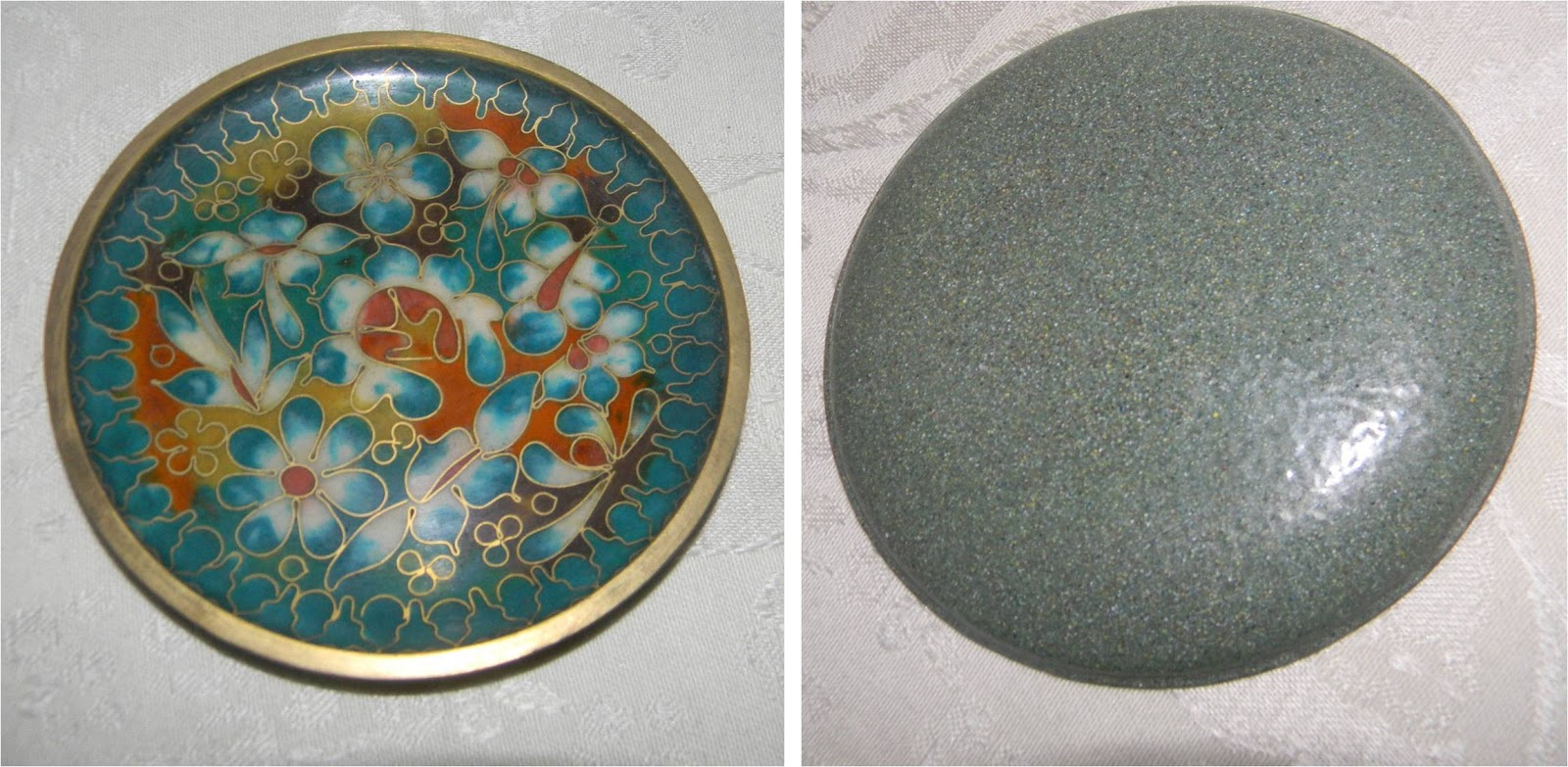 |
| Another Yun Kang or Kuo style plate. |
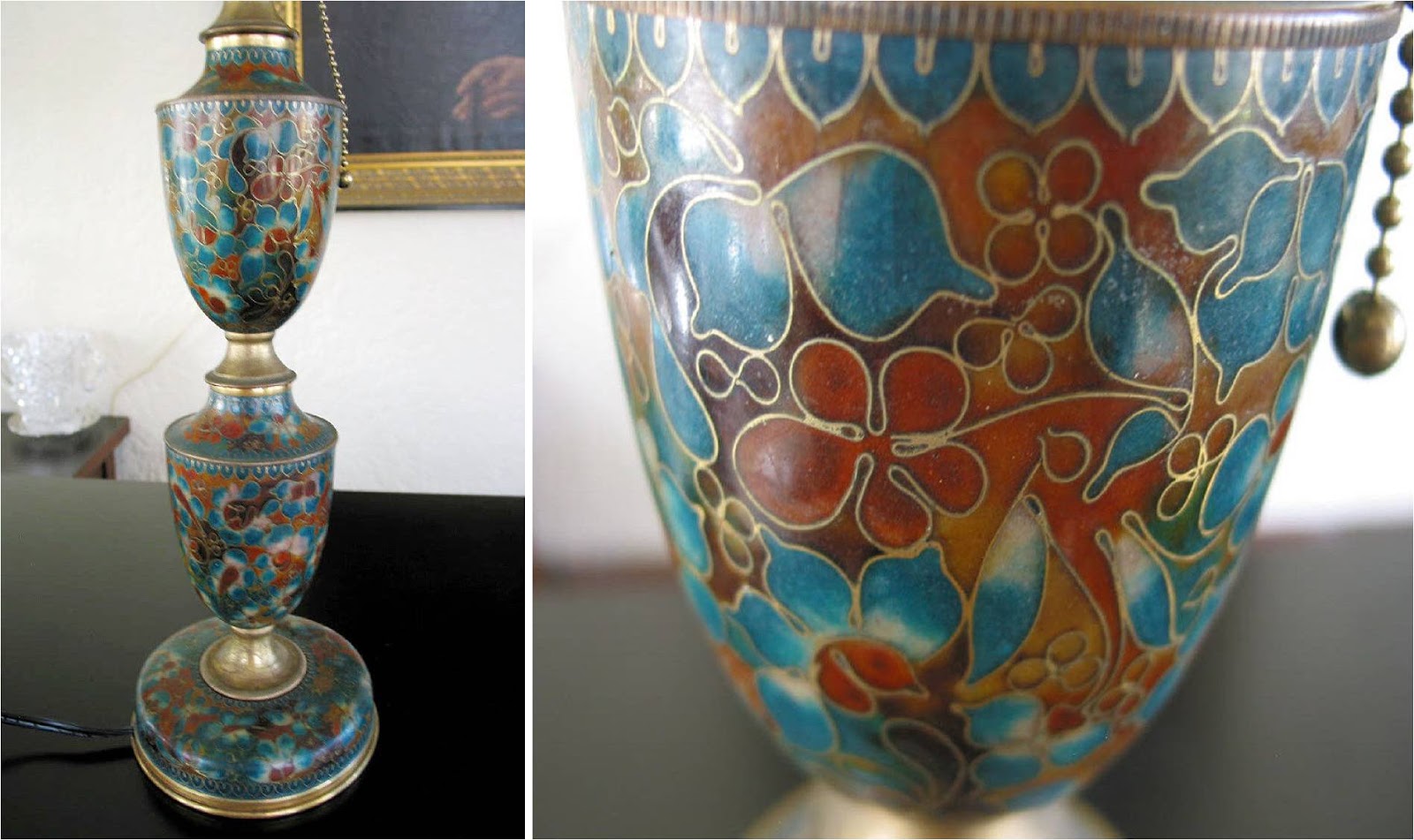 |
| Unusual 13" lamp that appears to be composed of two small vases soldered atop one another. Note the similarity in enamel and motifs to the plates above. Courtesy of eBay vendor chris638brad. |
UPDATE: A 5-page chapter, with photos, about the Kuo cloisonne factory appears in the 1977 book Cloisonné Extraordinaire by W. F. Alexander and Donald K. Gerber:
"A comparative newcomer to cloisonné manufacture is Taiwan. The factory in the beautiful country side near Taipei has been in operation since 1972. The most noteworthy thing about Taiwan cloisonné us that they have not copied any motifs of any kind. Even the borders are different."
UPDATE: Some mysterious cloisonné egg jars:
 |
| Small cloisonne egg jars with enamels and motifs similar to Taiwan cloisonne items. eBay seller relates purchasing them in Shanghai in the 1960s, was permitted to be in China at that time because not of U.S. nationality. |